
A woman sat in my office last year — mid-40s, mother of three, successful career — and told me something I've heard hundreds of times.
“I don't feel like myself anymore. I haven't for years. I'm not sad exactly… I'm just flat. Nothing excites me. I snap at my kids over nothing. By 3 p.m. I'm running on fumes, and by evening I just want to disappear into my phone and not talk to anyone.”
Her primary care doctor had prescribed an SSRI. She took it for four months. The flatness stayed. She gained 15 pounds. Her motivation dropped further. When she asked about alternatives, she was told: “We can try a different medication, but you're probably going to be managing this for a long time.”
She came to me because she refused to accept that.
And I'm glad she did — because what she was told simply isn't true.
The Study That Changes Everything
A landmark meta-analysis just published in Psychological Medicine by Cambridge University Press analyzed 179 clinical trials — the largest peer-reviewed analysis of natural compounds and depression ever conducted.
Key Finding from 179 Clinical Trials:
13 natural compounds outperformed antidepressants. And unlike the prescriptions, their side effects were comparable to placebo.
Among those 13 compounds, two stood out in particular: SAMe (S-adenosylmethionine) and saffron — both demonstrating efficacy equal to or greater than conventional antidepressants for mild-to-moderate symptoms.

Source: Cheng et al. “Comparative efficacy and tolerability of nutraceuticals for depressive disorder.” Psychological Medicine, 2025. Cambridge University Press.
This confirmed what I've been documenting in my own practice for years. Patient after patient. With standardized testing that produces before-and-after data far surpassing anything else I've seen for depression and anxiety.
As a Physician of 35+ Years, I See This Pattern All Too Often
My name is Dr. Neil Nedley. I’m a Board-Certified Internal Medicine physician, founder of the Nedley Depression & Anxiety Recovery Program, and author of three books on mental health — including Depression: The Way Out, translated into seven languages and used by clinicians worldwide. For over 35 years I’ve treated patients at every stage of depression and anxiety, and my program is now used in hospitals and clinics around the world.
But the story I hear most often isn’t dramatic sadness — it’s the slow, quiet dimming you just read about. These patients have usually tried everything they were told to: therapy, one prescription, then another. And when they ask why they still don’t feel like themselves, the answer is almost always some version of: “This is just something you’ll have to manage.”
“That answer has never been acceptable to me. In my 35 years of practice, I have never believed that a capable, intelligent person should simply ‘manage’ feeling flat, exhausted, and disconnected from their own life.”
So I did what any physician frustrated by inadequate answers does: I went to the research. I spent years reviewing peer-reviewed studies on neurochemistry, cerebral blood flow, and the lifestyle and nutritional factors that actually drive mood at a biological level. Hundreds of studies. Decades of clinical data from my own program.
What I found completely changed how I treat every patient who walks through my door — and it starts with one uncomfortable truth about the most commonly prescribed medications for depression.
Why Antidepressants Don't Work the Way Most People Think
The most commonly prescribed antidepressants — SSRIs — work by blocking the reuptake of serotonin. In simple terms, they try to keep whatever serotonin you already have circulating in the brain a little longer.
Sounds reasonable. But here's the problem no one talks about:
They do absolutely nothing to help your brain produce more serotonin in the first place.
Think about it this way. If your brain is producing inadequate amounts of serotonin, norepinephrine, and dopamine, blocking reuptake is like putting a stopper in a half-empty bathtub. You're holding onto what's there, but the faucet is barely running.
You might feel a slight difference at first. But you're never actually filling the tub.
Meanwhile, the side effects accumulate. Weight gain. Sexual dysfunction. Emotional blunting — that feeling of being “numbed out” rather than actually better. And here's something that should concern everyone: research shows that certain antidepressants can worsen impulsivity before they improve mood.
So here we are, giving someone a drug to help their depression that makes impulsive behavior worse before it addresses the depression itself. In my 35 years of practice, I've seen the damage this can cause.
And then the system tells them: “You're just going to have to manage this. You'll struggle with this your whole life.”
They don't have to accept that.
What's Actually Happening in Your Brain
Depression, anxiousness, and low mood aren't character flaws or inevitable consequences of aging. For many people, they're the result of a neurochemical production problem.
Your brain needs to manufacture serotonin, norepinephrine, and dopamine through a process called methylation. This process requires specific raw materials — certain B vitamins, zinc, and other cofactors — in forms that can actually cross the blood-brain barrier.
When those raw materials are missing, or when the methylation process itself isn't functioning properly, production drops. And no amount of reuptake blocking will fix a production problem.
This is the fundamental flaw in the conventional approach. It manages a deficit. It never fixes one.
The Two Compounds That Address the Root Cause
Once I understood this, I started researching compounds that could support the brain's production of mood chemicals — not just the recycling of them.
Two stood out above everything else.
How They Work Together:
Here's what makes this combination powerful: one compound helps your brain produce the chemicals. The other helps those chemicals work more effectively once they're produced. Together, they address mood chemistry at two different levels — something no single prescription does.
We were the first organization to combine SAMe and saffron into a single formula. And the before-and-after results we've tracked through standardized clinical testing have far surpassed anything else I've looked at in my career.

Start With the Complete Mood + Brain System
Subscribe and receive the online class, eBook, and clinical assessment — completely free
Subscribe & Claim Your Free Gifts →But I Learned Something That Changed My Approach Entirely
Early on, I made a mistake many supplement companies still make. I assumed the right nutrients alone would solve the problem.
They help — significantly. But I kept seeing patients who would improve and then plateau. Or improve and then slide back.
When I investigated why, the answer was clear: the same dietary and lifestyle patterns that depleted their brain chemistry in the first place were still running in the background.
Certain foods restrict blood flow to the brain. Others deplete the B vitamins and zinc that are essential for neurotransmitter production. Specific lifestyle factors — sleep patterns, screen habits, even certain “healthy” foods — were quietly undermining the supplements' effectiveness.
That's why I developed a complete system — not just supplementation, but the education to address the root cause.
The Complete Approach: Supplements + Education

Mood combines clinically studied doses of SAMe and saffron to restore your brain's ability to produce and utilize serotonin, norepinephrine, and dopamine naturally.
Brain provides the foundational building blocks those processes require — P5P (the activated, bioavailable form of vitamin B6), zinc picolinate (the most absorbable form of zinc for dopamine support), and biotin at levels shown to enhance cognitive energy metabolism. These are the raw materials your brain needs to actually run the methylation process that Mood is supporting.
Mood drives the engine. Brain supplies the fuel. Together, they address mood chemistry from both sides.
And when you subscribe, I include everything you need to address the lifestyle factors — completely free:
Included FREE With Your Subscription:
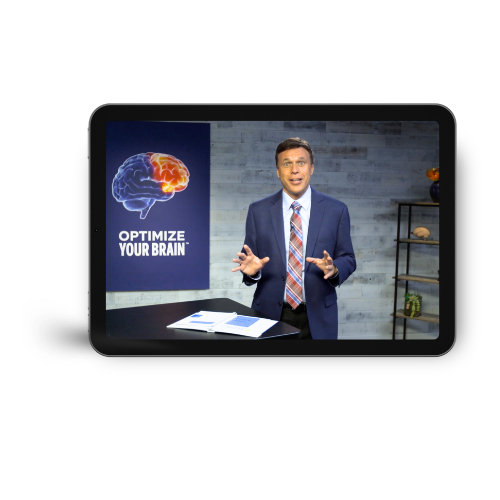
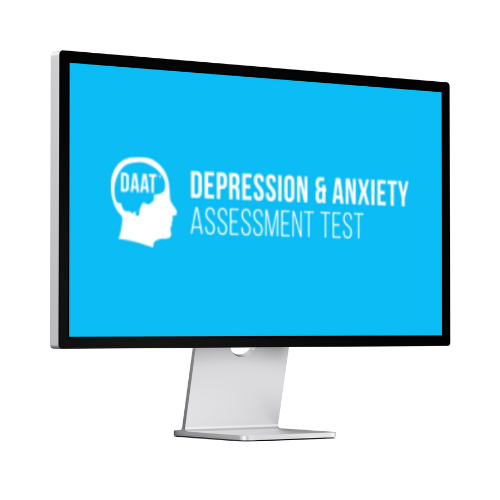
This is the approach I wish every patient had access to. Not just a prescription. Not just a supplement. A complete system that addresses the chemistry and the cause.
Real Results From Real People
That woman I mentioned at the beginning — the mother of three who felt “flat” for years? Within six weeks on this system, she told me something I'll never forget:
“I laughed at dinner last night. Really laughed. My husband looked at me like he'd forgotten I could do that.”
She's not unusual. Over 100 customers have rated Mood 4.5 out of 5 stars:


“Nearly 2,000 clinicians have shared Nedley Health with their patients on FrontrowMD — none of whom were compensated. In our clinical work, our Depression and Anxiety Recovery Program has consistently achieved response rates well above 90%.”
The Complete Mood + Brain System
Purchased separately, Mood and Brain retail for $94.98 per month. When you subscribe, you save $5 — bringing your monthly cost to $89.98 — and you get the complete educational system included free.
That's the supplements, the 6-week online class, the eBook, and the clinical assessment — over $218 in additional value at no extra cost.
We also include a 60-day, 100% money-back guarantee. If you don't feel a meaningful difference in your mood, energy, and emotional resilience, we'll refund every penny. No hassle, no pressure.
Get the Complete Mood + Brain System
✓ Free Shipping • Ships in 1 Business Day
✓ Cancel Anytime • No Commitment
This Isn't Something You Have to “Just Manage”
The most frustrating thing I encounter is watching capable, intelligent people be told their mood is just something they'll have to live with — that the best they can hope for is managing symptoms indefinitely.
The research shows otherwise.
When you address the underlying factors — neurochemical production, nutrient deficiencies, and lifestyle patterns — the brain has a remarkable capacity to recover.
Waking up and feeling like yourself. Having the patience your family deserves. Caring about things again. Looking forward to tomorrow instead of dreading it.
If you're experiencing low mood, anxiousness, emotional flatness, or that persistent feeling that something just isn't right — and you want an evidence-based approach backed by 35 years of clinical research — this system was designed for you.
I'd be honored to guide you through the process.
Try It Risk-Free for 60 Days
Join thousands who've reclaimed their emotional well-being — naturally
Subscribe & Claim Your Free Gifts →